Showing posts with label Ancient. Show all posts

Srirangapatta Palace of Tipu Sultan


Tipu Sultan son of King Hyderali of Mysore was also known as Tiger of Mysore. He was the ruler of Mysore from 1750 to 1799. He got to power after his father’s death in 1782. He won important battles like Anglo – Mysore war and was against the expansion of British East India Company in India. He was also a poet, solider and scholar. Tipu died in the year 1799 defending his capital Srirangapatta and was buried alongside his father and mother in the city of Srirangapatta.

Srirangapatta was Tipu’s summer residence and place where he died during the Fourth Anglo –Mysore War in the year 1799. He and his family members are buried in the same place and the palace now contains artifacts belonging to Tipu Sultan.

Rare paintings, weapons, furniture’s and pictures of Tipu Sultan and other important family members, ministers are kept for display.


The Mysore Palace


The Palace of Mysore is a palace situated in the city of Mysore in southern India. It is the official residence of the Wodeyars - the erstwhile royal family of Mysore, and also houses two durbar halls.  Also known as Amba Vilas, it is located in the heart of the city of Mysore. The palace was initially built by the Wodeyar kings in the 14th century.


Mysore Palace is one of the most magnificent buildings. It is a sight not to be missed when it is illuminated on Sundays and festive occasions. The interior of the Palace is equally worth a visit, for its spacious halls, called Mantaps, paintings and architectural beauty. The palace is an excellent combination of Indo-Saracenic architecture. The domes and the outside construction are of Muslim architecture. But the interior of the Palace is a fine example of Hindu architecture.
Today the palace is converted into a museum that is home to souvenirs, paintings, jewellery, royal costumes and other items which were once possessed by the Wodeyars.


The Great Banyan Tree


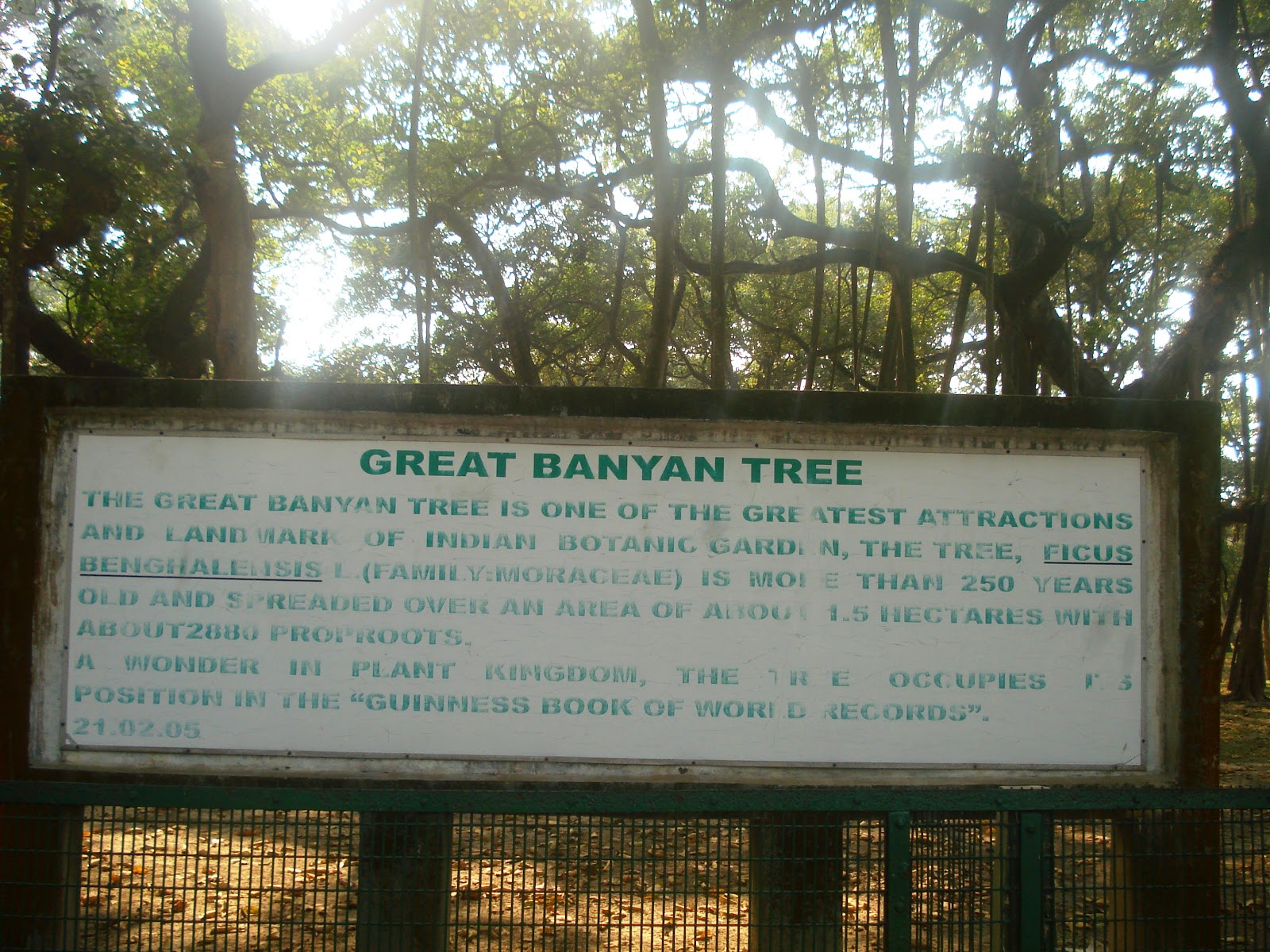
The Great Banyan Tree is a banyan tree which is 250 years old and widely spread across, which is largest in Asia. IT holds a record in the genius book of records.Botanically known as Ficus Benghalensis, the Great Banyan tree is located in Howrah district of West Bengal. The Great Banyan looks more like a jungle than an individual tree. The tree now lives without its main trunk, which decayed and was removed in 1925. The circumference of the original trunk was 1.7 m and from the ground was 15.7 m. The area occupied by the tree is about 14500 square meters. The present crown of the tree has a circumference of about 1 kilometer and the highest branch rises to about 25 m; it has at present 3300 aerial roots reaching down to the ground.


The Great Banyan Tree has stood firm and steady after seeing a numbers of wars and battles. A must visit place which gives a warm feeling and surrounded by numerous flora and fauna.


Vidyasagar Setu in Kolkata


Vidyasagar Setu, also known as second Hooghly Bridge, a Golden Gate Bridge which connects the twin cities of Kolkata and Howrah. With 9 lanes of traffic routes the bridge is capable of handling more than 85,000 vehicles every day.


The Vidyasagar Setu is a cable stayed bridge, with a main span of little over 457 meters and 35 meters wide.The construction work took 22 years and cost Rs. 3.88 billion and finally it was opened to traffic officially on 10th October 1992. It is a most sophisticated engineering marvel and the world's third largest cable-stayed bridge. Supported by 121 wire cables.


Victoria Memorial in Kolkata


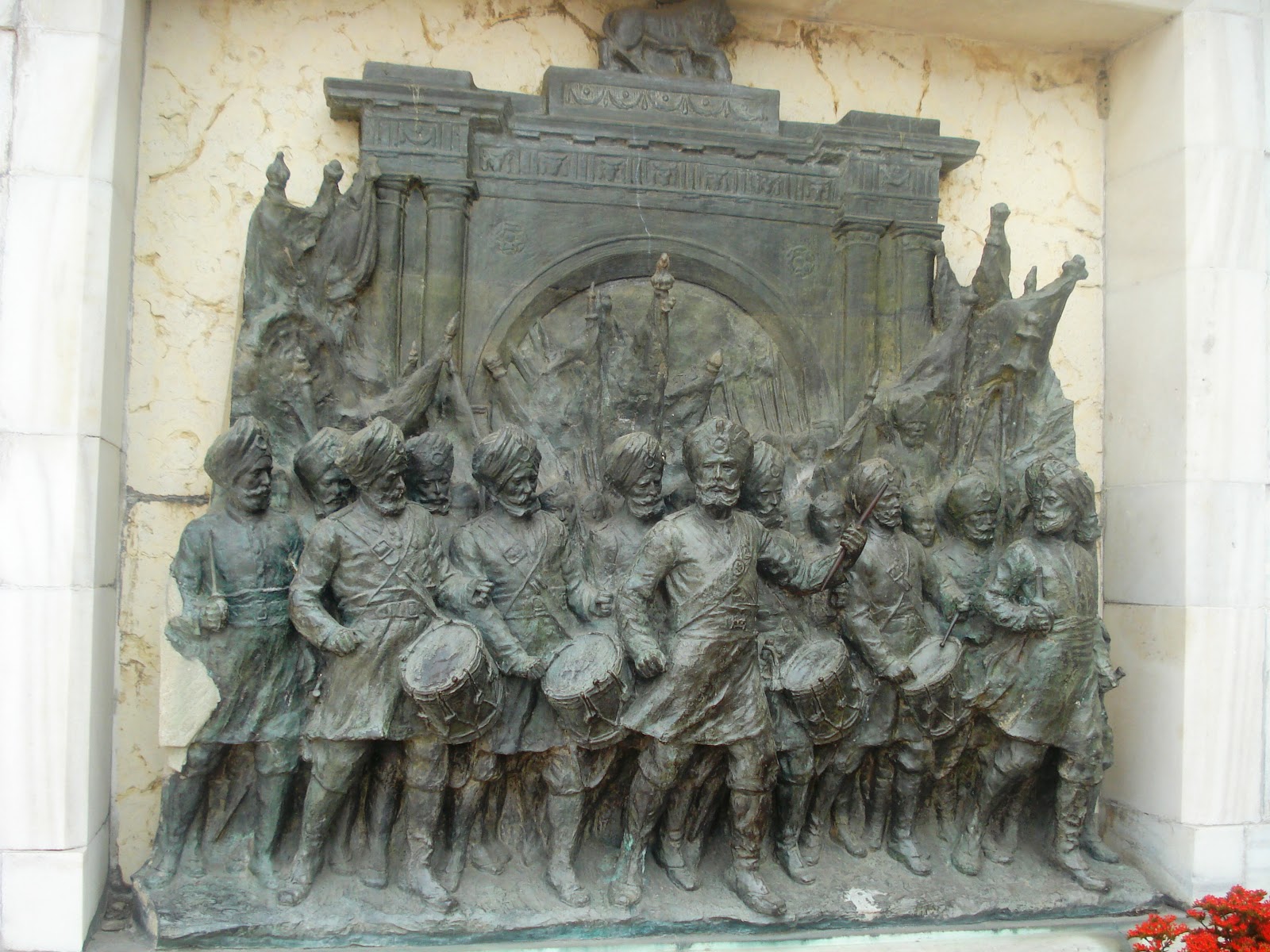
Victoria Memorial was built and inaugurated in the memory of Queen Victoria in the year 1921 located in Kolkata. This historic memorial was built for people to see and get a feel of pictures and statues of great men who played a vital role in the history of India. Victoria Memorial reflects British and Mughal architecture which was completely built in Rs 1 Cr 50 Lakhs and these funds were generated through voluntary donations.


Memorial stands enclosed with 64 acres of blooming gardens and house of large paintings, collections related to Queen Victoria.After Independence in the year 1947, paintings and items related to Indian Independence was included in the memorial.


The 1973 October Panorama in Egypt


The 1973 October Panorama and Myopia located in Cairo in the Nasr City which is very close to the airport. The October 1973 War with Israel is celebrated in Cairo and Damascus with a museum of similar design and the main attraction of the museum is a panoramic 360 degree, 136 meter cyclorama of the crossing of the Suez Canal by Egyptian forces and the capture of Israeli position on its east bank


This concept is very famous in the North Korea and was proposed to President Hosni Mubarak by the Korean Leader Kim II Sung to immerse the visitors into the surround view of the battle field. The view is a seam less sequence of diorama type constructions that blend into painted backdrop scenes.


The museum also consist outdoor gallery of war vehicles, war tanks, guns and jet fighter. 

7 Best wonders of the world

Taj Mahal in India – The Taj Mahal, the famous monument in Agra, India, was constructed between 1630 and 1648 by shah Jahan, the Muslim leader of India, as memorial to his favorite wife, Mumtaz Mahal. The overall effect of the Taj Mahal is one of the complete tranquility. Although its bulbous dome stands more than 250 feet high, the entire structure appears weightless and light and elegant. The sheer white marble surfaces of the building shimmer in the reflecting pool, glowing under the balloon like dome.

Colosseum in Italy - The Roman Colosseum was built between AD 70 and 80, and it was in used for gladiatorial events, battle reenactments, animal hunts and other performances for 500 years. The Colosseum sat nearly 50,000 spectators, and its design still influences the construction of modern-day amphitheaters. Earthquakes and stone-robbers have left the Colosseum in a state of ruin, but portions of the structure remain open to tourists. At the Colosseum, the ancient Romans enjoyed gladiatorial combat, horse races, naval demonstrations and other, more gruesome spectacles. Even in its ruined state, the Colosseum remains an impressive monument.

Great Wall of China - The Great Wall of China sprawls some 1500 miles across the Asian continent. The emperor Shih Huang Pi began this incredible project in the fifth century B.C. in the order to keep would be invaders at bay. A turret in the one of its towers provides a dramatic vista onto the wall’s expanse.

Christ of Redeemer in Brazil - The Christ the Redeemer statue stands at the top of the 2,330-foot-tall Corcovado Mountain, looming over the city of Rio de Janeiro, Brazil. The 130-foot-tall statue of Jesus Christ was completed in 1931 and is made of reinforced concrete and soapstone. It is one of the largest Art Deco statues in the world, and it weighs in at 2.5 million pounds.

Petra in Jordan - Petra, an archeological city in Jordan, is known for its dusty pink buildings carved out of rock and its impressive water conduit system. Built sometime around the 6th century BC, Petra was the capital city of the Nabataeans. The entrance to the city of Petra is through a narrow gorge, flanked on either side by 250-foot cliffs. The most recognizable building in Petra is the Treasury, carved completely out of rock as a tomb for a Nanataean king. The building's facade stands almost 150 feet high.

Machu Picchu in Peru - Machu Picchu, a 15th-century Inca archaeological site, sits 7,000 feet above sea level in the Andes Mountains of Peru. It is often referred to as the 'Lost City of the Incas,' because it was known only to locals until it was discovered in 1911 by American historian Hiram Bingham.

Itza in Mexico - The main attraction of Chichen Itza is the pyramid also known as El Castillo. Built sometime between 1000 and 1200, the pyramid was used as a temple to the god Kukulkan. The powerful city flourished from AD 800 to 1200 and was a trading center for cloth, slaves, honey and salt. Archaeologists believe that the pyramid also served as a calendar for the Mayas. In total it has 365 steps -- one for each day of the year. Chichen Itza is the largest known city of the Mayan civilization, located in Mexico's Yucatan Peninsula.

The Tombs of the Kings


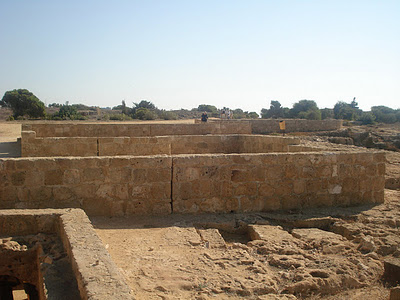
The Tombs of the Kings was the burial ground of pathetic aristocrats and high officials in the 300BC. As the name of this site goes, there is no evidence of any king or royalty buried.  This is located 2 kms north west of Paphos harbor towards Coral bay (New Paphos) in Cyprus.

  
The tombs are impressive and carved out very well on solid rock. There are 8 complexes and out of which 3, 4 and 8 are the best and explored the most. Archaeologists have excavated 18 burials from the Hellenistic period in this tomb, three of which had not been robbed due to collapsed material in front of them. Two of them contained an ointment container, a myrtle wreath of gold and fine Rhodian amphorae. In the third, a child had been buried in a terracotta pipe.


 This is the main tourist attraction in Paphos and getting there is very easy. The entrance is just off the main road and opposite to bus station. Entrance ticket is very cheap only 1.70 euro’s and it’s a worth visiting once.  Kindly travel in the early morning if possible or else it will be very hot and humid.  


How to Get There:
Travelling by public transport (BUS) is very convenient and affordable from different cities of Cyprus. Service is excellent.

7 best historic places in India


Taj Mahal – The Taj Mahal, the famous monument in Agra, India, was constructed between 1630 and 1648 by shah Jahan, the Muslim leader of India, as memorial to his favorite wife, Mumtaz Mahal. The overall effect of the Taj Mahal is one of the complete tranquility. Although its bulbous dome stands more than 250 feet high, the entire structure appears weightless and light and elegant. The sheer white marble surfaces of the building shimmer in the reflecting pool, glowing under the balloon like dome. 

Khajuraho Temples –Located in Chhatarpur district of Madhya Pradesh, Khajuraho temples are very different from the other temples of India. These temples are not associated to any religion, deities and worshipping. It is about great architecture, sculpture and art of ancient period.

Qutub Minar – Qutub Minar was constructed in the year 1192 by Qutub-ud-in Aibak. This tower is an exquisite example of Indian Islamic Afghan architecture. Qutub Minar is 14.32 meters and top structure is 2.75 meters which provides excellent view of Delhi City.

Ajanta and Ellora Caves – These are rock cut caves of ancient period built by Buddhist monks. Ajanta and Ellora caves contain fine sculptures and murals which is around 2000 years old. There are in total 34 caves out of which 12 are Buddhist, 17 Hindus and 5 are Jain. Ajanta caves are rich in paintings and sculpture, the Ellora caves are renowned for their extraordinary architecture. The most incredible thing about these caves is that they were crafted by hand.

Redfort – Redfort also known as Lal Qila was residence of Mughal Emperor in the 17thcentury. This fort was built by Shah after he moved out of Agra in 1618 and shifted to Delhi. The main halls of the palace are draped in rich tapestry and covered with silk from china and velvet from Turkey. With a circumference of almost one and a half miles, the fort is an irregular octagon and has two entrances, the Lahore and Delhi Gates.

Jantar Mantar – Maharaja Jai Singh II constructed five astronomical observatories in 1734 in the west central part of India. Jantar Mantar incorporates multiple buildings of unique form, each with a specialized function for astronomical measurement. These structures with their striking combinations of geometric forms at large scale have captivated the attention of architects, artists, and art historian’s worldwide.

Fatehpur Sikri –This is a city which was built by Akbar and capital of Mughal Empire in the 16thcentury. Fatehpur Sikri is built with red sandstone filled with regal palaces and huge courtyards. The complex of monuments and temples, all in a uniform architectural style, includes one of the largest mosques in India, the Jama Masjid.

Jama Masjid in Burhanpur


Jama Masjid in Burhanpur was constructed during the Farooqi rule in India. This was constructed by Azam Humayun for his wife and queen Begaum Ruqiaya in the year 1421 and called it as‘Bibi ki Masjid’. This was the first Jama Masjid in Burhanpur and famous during that period.


Since the population of Burhanpur was increasing, in 1590 ruler Adil Shah built another Jama Masjid in the heart of the city, so that it can be accessible to everyone easily. This Masjid could accommodate 500 people at a time and was completed in the year 1595. Jama Masjid of Burhanpur is an excellent example of Islamic art and architecture, which can be seen on the arches built inside of the Masjid.

The Jama Masjid of Burhanpur was built inlines to Jama Masjid of Delhi.

Things to do in Hyderabad


Hyderabad is the first hi-tech city of India and was also known as ‘City of Pearls’. It is believed that each pearl will go through hands of Hyderabadi artist for some or the other reasons. Hyderabad was known as a center for diamond and pearl trade in the 16th - 18th century and has currently immerged into an IT Hub of India.

Hyderabad was founded by Muhammad Quli Qutub Shahi in 1591-92. Qutub Shahi ruled for almost 171 years and Kingdom of Golconda was build and one of the five kingdoms that emerged during Qutub Shahi regime.

The growth of Hyderabad both culturally and economically grew during the rule of Nizam’s. Hyderabad became a part of Andhra Pradesh State in the year 1956. Hyderabad is the home city for the Telugu Film Industry, popularly known as ‘Tollywood’.

City Attractions: 

Golconda Fort
Build by Qutub Shahi in the 16th century and standing tall with imposing gates, winding gates, and residential quarters. Golconda fort use to have the famous Kohinoor and Hope diamonds kept in its Vault chambers once upon a time.

Naya Qila which is an extension of the fort just opposite to it and also Qutub Shahi tomb is located around one km away from the outer gates of Golconda fort. Beautifully carved and surrounded by gardens.

Birla Mandir
Birla Temple was constructed by the Birla’s and also funds are given by them to support temples around the country.  The temple was constructed in the year 1976 with Rajasthani marbles, graces Kalabahad (Black Mountain) one of the two rocky hills overlooking the Hussain Sagar.

Mandir was inaugurated by Mahatma Gandhi and kept a condition that the Mandir would be open for all.

Salar Jung Museum
The largest and most precious collection of Salar Jung III a noble man from Hyderabad.
The museum contains artifacts, handicrafts, paintings and other articles which was collected by one single man.

There are 38 galleries and have 3 blocks – Indian Block, Western Block and the Eastern Block.  There are around 13,654 objects in display and collected from all around the country and world.

Ramoji Film City
Do not get amuse to see London, streets of Mumbai or Taj Mahal inside as these are only set created in the film city, a unique theme park cum film facility inside Ramoji Film city.

With entry charge of Rs 250, you can enjoy the comedy shows, joy rides and beautiful parks located outskirts of the film city.

Pearl Shopping
Hyderabad trip is not over until you don’t visit the pearl market or buy pearls. Each shop has its own style and design. You will find different kinds of size, shape, colored pearls in the market.

Pearls are cheap and don’t forget to buy one for your love ones.

Charminar
The Minar which stands for the intermingling of Hindus and Muslims traditions is imposing by day and night. Walk up through the staircase and you can view the city clearly. 

Nehru Centenary Tribal Museum
This museum, run by the Andhra government for Tribal welfare development gives a glimpse of their culture and way of life.

It exhibits photographs, music instruments and dioramas of village life and some exquisite Naikpod masks.

Restaurants
Hyderabad is famous for its Hyderabadi biryani. People all around in the country love hyderabadi biryani. It is very spicy and filled with dry fruits.

Things to do:
Pearl Shopping
Temples
Forts, Museums
Restaurants

Places nearby to visit:
Kurnool
Bhongir
Nalgonda
Nizamabad
Warangal

Famous for:
Temples
Film City
Restaurants
Museums

Suggestions:
Hyderabad is a very big and crowded city.
Place mentioned above are far from each other and need to plan well to view them all.
City bus tours would be a better option and convenient too.
Climate is hot and humid.

The Aga Khan Palace in Pune

The Aga Khan Palace located in Pune was built in the year 1892 by Sultan Muhammad Shah, Aga Khan III. The main aim for building Aga Khan Palace was to provide help and shelter to poor people residing nearby areas of Pune.


 Aga Khan Palace was built with lavish decorated guest rooms and suites which can give you a glimpse of royal heritage buildings of the past. Palace holds a significance as it was prison for Mahatma Gandhi, his wife Kasturba Gandhi and his secretary Mahadev Bhai Desai from 1942 till 1944. Both Kasturba Gandhi and Mahadev Bhai Desai died at Aga Khan Palace during their imprisonment and have their memorials located at the same place.


Today Aga Khan Palace stands as memorial of the Gandhi’s and historical place where Gandhi’s ashes were kept. There is also shop inside the palace which deals in Khaki and hand loom products. In the year 1980 the museum, samadhi and the palace campus was handed over to Gandhi Memorial Society.

How to Get There:

Pune is very well connected to other cities in India by roads, railway and airways. It is only 180 kms away from Mumbai city.

The Great Pyramids of Eygpt


In the Valley of the Kings in Giza, Egypt, the forty five hundred year old majestic pyramids form tombs for the ancient Egyptian pharaohs Mycerinus, Chephren and Cheops. In addition to the remains of these rulers, the tombs originally contained everyday items the ancient Egyptians believed the soul would need in the afterlife. 

There are about eight pyramids known today out which three are built in Giza. The ‘Great Pyramid’ was built for King Khufu which is well known in the valley.


It was believed that when the pharaoh dies, he becomes an Osiris, king of the dead. The new pharaoh becomes Horus, god of the heavens and protector of the sun god. This cycle was symbolized by the rising and setting of the sun.

7 Great Kings of India


Chandragupta Maurya– Chandragutpa Maurya was the first emperor of India and was the founder of Maurya Emperor. He almost captured the whole Indian Subcontinent during his rule from 1541 to 1507 BC. Chandragupta left his throne and became a Jain monk. He was succeeded by his son Bindusara in 298 BC. He died due to starving.

Ashoka –Bindusara’s son Ashoka the great became one of the most influential kings of India in the Indian history. Ashoka was a great king and fighter, he devoted himself to Buddhism after the victory of Kalinga. After winning the Kalinga, he went into the city and saw ruined houses, children crying, bodies lying in pool of blood which made him feel sad and he underwent a religious epiphany. Ashoka died at the age of 72 and Maurya Empire continued for more 50 years but later started declining. King Brhadrata was the last Murayan Emperor and was assassinated by his own general in 185 BCE. Ashoka’s principles and teachings are still alive through the Vedas even after his death.

Akbar – King Akbar was born in 1542 to Emperor Humayun. He was also known as Akbar the great or Jalaluddin Muhammad Akbar. He became an Emperor at the age of 13 from 1542 to 1605. Akbar had a great interest in art, music, architecture and literature. He was the third and most successful Mughal Emperor of India.

Maharana Pratap Singh – Maharana Pratap Singh born in the year 1540 and was the king of Mewar in Rajasthan. He was the eldest son among 25 sons of Maharana Udai Singh II and was destined to be 54th ruler of Mewar in line of the Sisodiya Rajputs. He was against the Mughal Emperor Akbar just like Shivaji was against Aurangzeb. He was very patriotic and fought with honor to save its people and kingdom from Mughal rule. He ruled Mewar till 1597 and died at the age of 56 due to a serious injury caused during hunting.

Chatrapati Shivaji- Shivaji was born in 1627 and was the founder of Maratha Empire which lasted till 1818. Shivaji created his own Empire with Raigad as its capital and freed all Maratha from Mughal Empire. Shivaji was very famous for his Guerilla warfare tactics also known as Shiva sutra. He inspired and united all Maratha or Hindus to fight against Aurangzeb by motivating them a sense of pride and nationality.

Tipu Sultan – Tipu Sultan son of King Hyderali of Mysore was also known as Tiger of Mysore. He was the ruler of Mysore from 1750 to 1790. He got to power after his father’s death in 1782. He won important battles like Anglo – Mysore war and was against the expansion of British East India Company in India. He was also a poet, solider and scholar. Tipu died in the year 1799 defending his capital Srirangapatta and was buried alongside his father and mother in the city of Srirangapatta.

Prithiv Raj Chauhan– Prithiv Raj Chauhan was the last ruler of the Chauhan dynasty. He was son of Someshwar Chauhan and born in Ajmer. He became king at the age of 13 due to his father death in a battle. He was a very brave warrior and once killed a lion without any weapons in hand. Prithviraj was defeated and captured in the second battle of Tarain by Mahmud Ghori. He was treated very badly and made blind by Ghori for not lowering down his eyes. He never lost hope and with help of his court poet and friend Chand Bardai he killed Ghori with an arrow. His skills of hitting the target just on the basis of sound made him kill Ghori. During an archery competition organized by Mahmud Ghori, he heard his voice and attacked him. Mahmud Ghori was killed by an arrow stuck in his neck. In order to escape death at the hands of enemies Prithiv Raj Chauhan and his friend Chand Bardai stabbed each other.

Sabz Palace of Iran


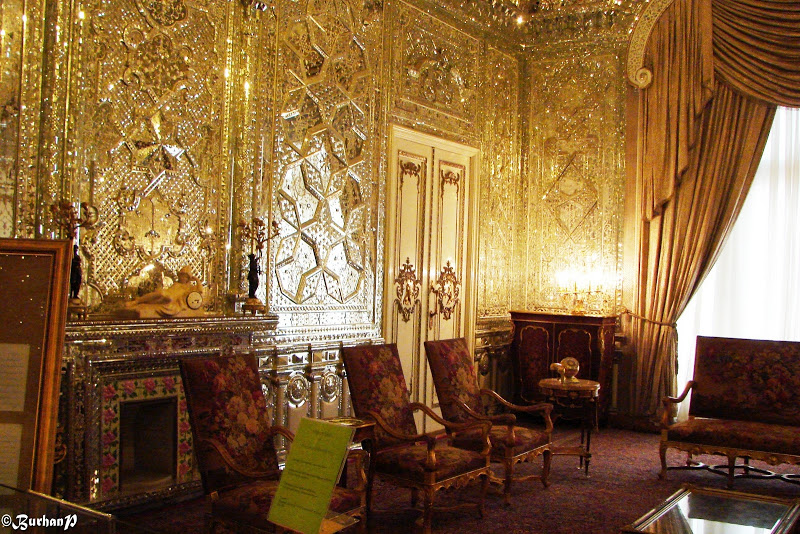
Sabz Palace also known as Shahvand Palace was constructed by Reza Khan in 1927 to the north west of Darband on the hillock of Sa’d Abad. This Palace is located in the Tehran region of Iran. This palace has a mirror pavilion, an entertainment area, a dining room, bed room and an office room. The facade of this palace is ornamented with green stones.
The valuable carpets within are masterpieces of reputed Iranian carpet weavers. Most of the decorative articles of the palace had been brought from Europe in the year 1974-75.
The ceiling room was covered in Italian leather. There are some speakers in the ceiling for music and radio. The tables and chairs are made of cherry wood, from America. The dishes are crafted by BAKARA and LIMOGE companies. The rug was woven in England and design of the rug is similar to the roof. In the right, Goblins are made in France which belongs to the 18thCentury.
Shahvand Museum features superb stucco carvings and mirror works with Iranian items, carpets as well as foreign chandeliers, paintings, sculptures and furniture.